
Hunting
What to Look for in a Hunting Lease Before You Commit
Access, habitat, pressure, and the details that matter before you sign.
By Paul Cignarella · Published 2026-08-23 · 4 min read
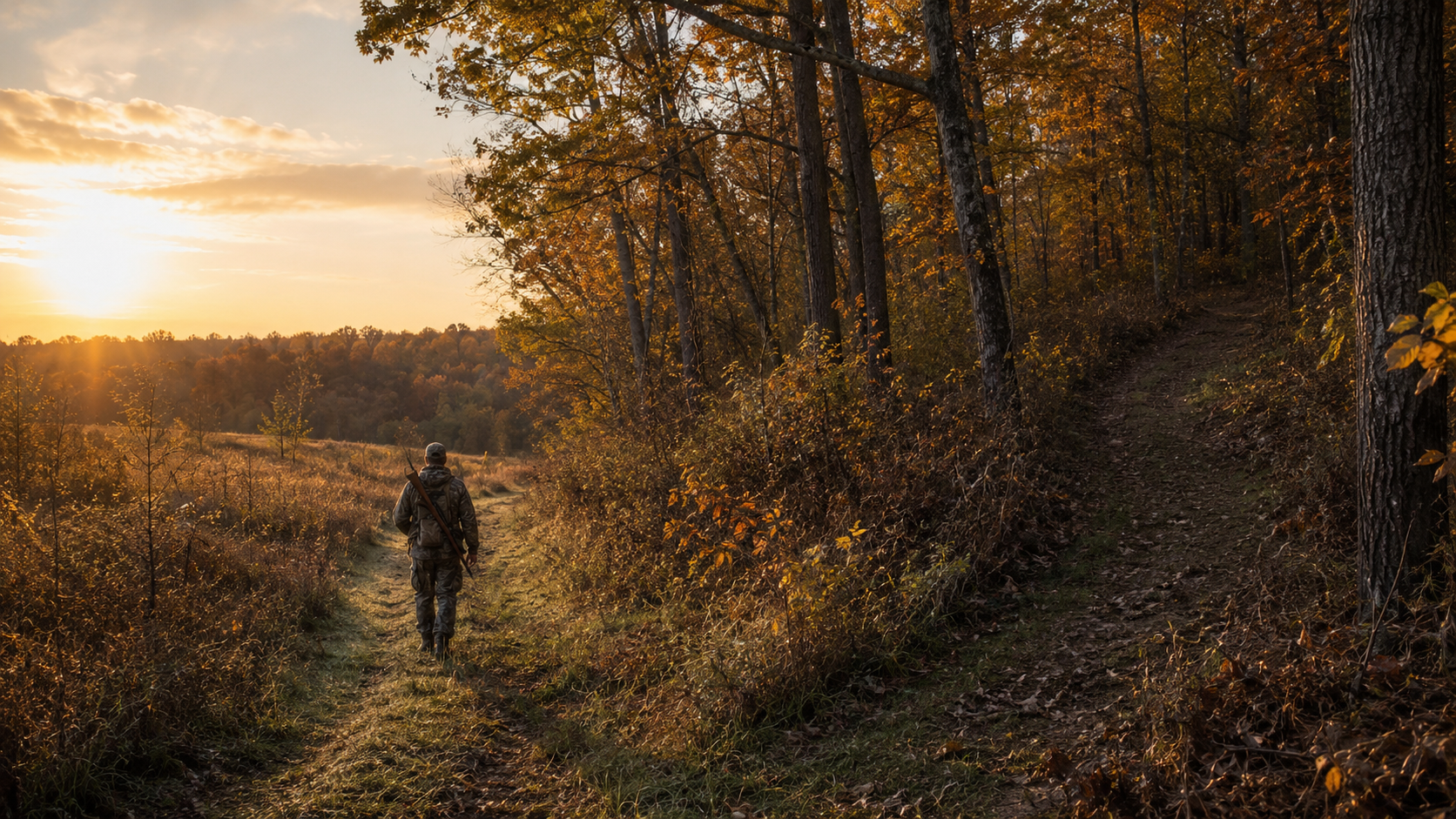
Hunting leases can look great in photos and still hunt poorly once the season starts. A big piece of ground does not automatically mean good hunting, and a smaller property with the right layout can sometimes offer exactly what you need.
Before you commit to a hunting property, look beyond acreage and price. Think about how animals use the land, how you will access it, what surrounds it, and whether you can realistically hunt it without constantly disturbing the areas you are trying to protect.
Browse ShantyBB hunting land listings
Here are some of the biggest things we would look at before putting money down.
Start With Access
Access is one of the most overlooked parts of a hunting lease.
Look at where you can park, how you enter the property, and whether you can reach likely hunting locations without walking directly through bedding areas, feeding areas, or major travel routes.
A property may have excellent habitat but be difficult to hunt if the only entrance forces you through the middle of it every morning.
Consider:
- Where vehicles can be parked
- Whether multiple access points are available
- How prevailing winds affect your entry routes
- Whether roads or trails remain usable during wet weather
- How difficult it will be to remove harvested game
Good access allows you to get in and out while keeping disturbance to a minimum.
Look for Security Cover
Game animals need places where they feel comfortable spending time during daylight.
For deer hunters, that may mean thick brush, young timber, swamp edges, overgrown fields, creek bottoms, or other areas offering concealment. Other species have their own habitat preferences, but the principle is the same: animals generally need more than an open field and a food source.
When looking at a property, ask yourself where animals can bed, hide, or escape pressure.
A parcel with a mix of open ground and thicker cover will often give you more options than acreage made up entirely of one habitat type.
Identify Natural and Agricultural Food Sources
Food can influence how wildlife moves across a property, especially when it sits between bedding cover and reliable feeding areas.
Depending on the region, useful features might include:
- Agricultural fields
- Hard mast-producing trees
- Soft mast
- Browse
- Native vegetation
- Food plots
- Creek bottoms and wetland edges
Do not assume that a food plot automatically makes a property productive. Look at the entire surrounding landscape.
Sometimes the strongest food source is actually next door, and the property you are considering becomes valuable because animals travel through it to get there.
Study the Neighboring Land
What happens outside the property lines can matter just as much as what happens inside them.
Use aerial imagery and, when possible, talk with the landowner about neighboring properties.
Is the lease surrounded by large timber holdings? Farms? Residential development? Public hunting ground? Other leases?
A property bordered by heavily hunted land may experience different wildlife movement than one surrounded by lightly pressured private ground.
Also look for neighboring features such as:
- Large agricultural fields
- Thick bedding cover
- Water
- Public access points
- Roads
- Housing developments
- Known hunting activity
You are not just leasing an isolated parcel. You are hunting part of a much larger landscape.
Understand Hunting Pressure
Ask who else will have access.
Will the landowner hunt the property? Are other hunters leasing portions of it? Do family members use it? Are hikers, farmers, loggers, or recreational riders regularly present?
None of those automatically make a property bad, but you should know what you are signing up for.
A clear conversation about property use can prevent problems later.
Walk the Property Before Committing
Maps are useful, but boots on the ground tell you things aerial imagery cannot.
Look for trails, tracks, droppings, rubs, scrapes, bedding areas, crossings, old stands, fences, gates, creek crossings, and evidence of human traffic.
You are not trying to prove that a giant buck or trophy animal lives there. You are trying to understand whether the property has the habitat, access, and layout needed for the type of hunting you want to do.
Make Sure the Rules Work for You
Before paying for a lease, understand exactly what is permitted.
Ask about:
- Number of hunters allowed
- Guest policies
- Stand and blind placement
- Trail-camera use
- ATV or UTV access
- Camping
- Fires
- Food plots
- Tree cutting
- Game retrieval
- Parking
- Property boundaries
Written expectations are better than assumptions.
The Best Lease Is One You Can Hunt Effectively
A hunting lease should fit your hunting style, not just your budget.
Good habitat matters. So does access. So do neighbors, pressure, property rules, and the ability to hunt different wind directions without burning out the entire property.
Before committing, slow down, study the ground, walk it if possible, and ask questions.
Finding the right piece of hunting land is not about chasing the biggest acreage number. It is about finding a property you can hunt intelligently from opening day through the end of your season.
By Outdoorsmen. For Outdoorsmen.