
Whitetail
Whitetail Season Prep: What to Check on Leased Hunting Land Before Opening Day
Scout smarter, check your setup, and know the property before the season starts.
By Paul Cignarella · Published 2026-08-23 · 4 min read
Whitetail season has a way of sneaking up on you.
One minute you are talking about where you might hunt this fall. The next, you are standing at the truck before daylight wondering why you never cleared that trail, checked that stand, or figured out how the wind actually moves through the property.
If you are hunting rented or leased ground this season, the weeks before opening day are the time to learn the property.
Browse ShantyBB hunting land and whitetail property listings
You do not need to tear the place apart looking for deer. You need to understand how the ground fits together.
Start With the Property Rules
Before scouting, hanging stands, trimming shooting lanes, or driving an ATV onto leased property, make sure you know what the landowner allows.
Confirm:
- Property boundaries
- Approved parking areas
- Vehicle access
- Stand and blind rules
- Trail-camera rules
- Guest policies
- Areas that are off-limits
- Game-retrieval procedures
Do this before you start making plans around a spot you may not actually be allowed to hunt.
Scout the Big Picture First
When we look at new whitetail ground, the first goal should be understanding terrain and habitat rather than immediately picking a tree.
Start with an aerial or mapping application and identify obvious features:
- Fields
- Thick cover
- Timber edges
- Creek bottoms
- Wetlands
- Ridges
- Saddles
- Funnels
- Fence crossings
- Logging roads
- Habitat transitions
Then walk the property and see how those features actually look from the ground.
Maps help you form a theory.
Boots on the ground tell you whether that theory makes sense.
Look for Sign, but Look for Patterns
Tracks, droppings, rubs, scrapes, beds, and trails can all tell you that deer are using an area.
The more important question is how they are using it.
A heavily worn trail leading from thick cover toward an agricultural field tells you more than an isolated track in the middle of an open woods.
Look for connections between: Bedding cover → travel routes → food
Those relationships can help you understand where deer may move during legal shooting hours.
Keep in mind that deer movement changes throughout the fall. Food sources change, hunting pressure changes, and breeding behavior eventually changes movement as well.
Your preseason scouting gives you a starting point, not a permanent answer.
Think About Wind Before Hanging a Stand
A great-looking stand location is not very useful if your scent is blowing directly toward where you expect deer to come from.
Before committing to a tree or blind location, think about the wind directions that allow you to hunt it.
Ideally, leased ground gives you multiple options.
One stand may work with a west wind while another is better with a north wind.
Trying to force the same location to work every day can lead to unnecessary pressure on the property.
Plan Your Entry and Exit
How you reach the stand may be just as important as where the stand sits.
Avoid walking through likely bedding cover or across the same feeding area you expect deer to enter later.
Think about morning and evening hunts separately.
An entry route that works well before sunrise might leave you trapped walking through feeding deer after dark.
Use terrain, field edges, existing roads, creeks, and cover to your advantage when possible.
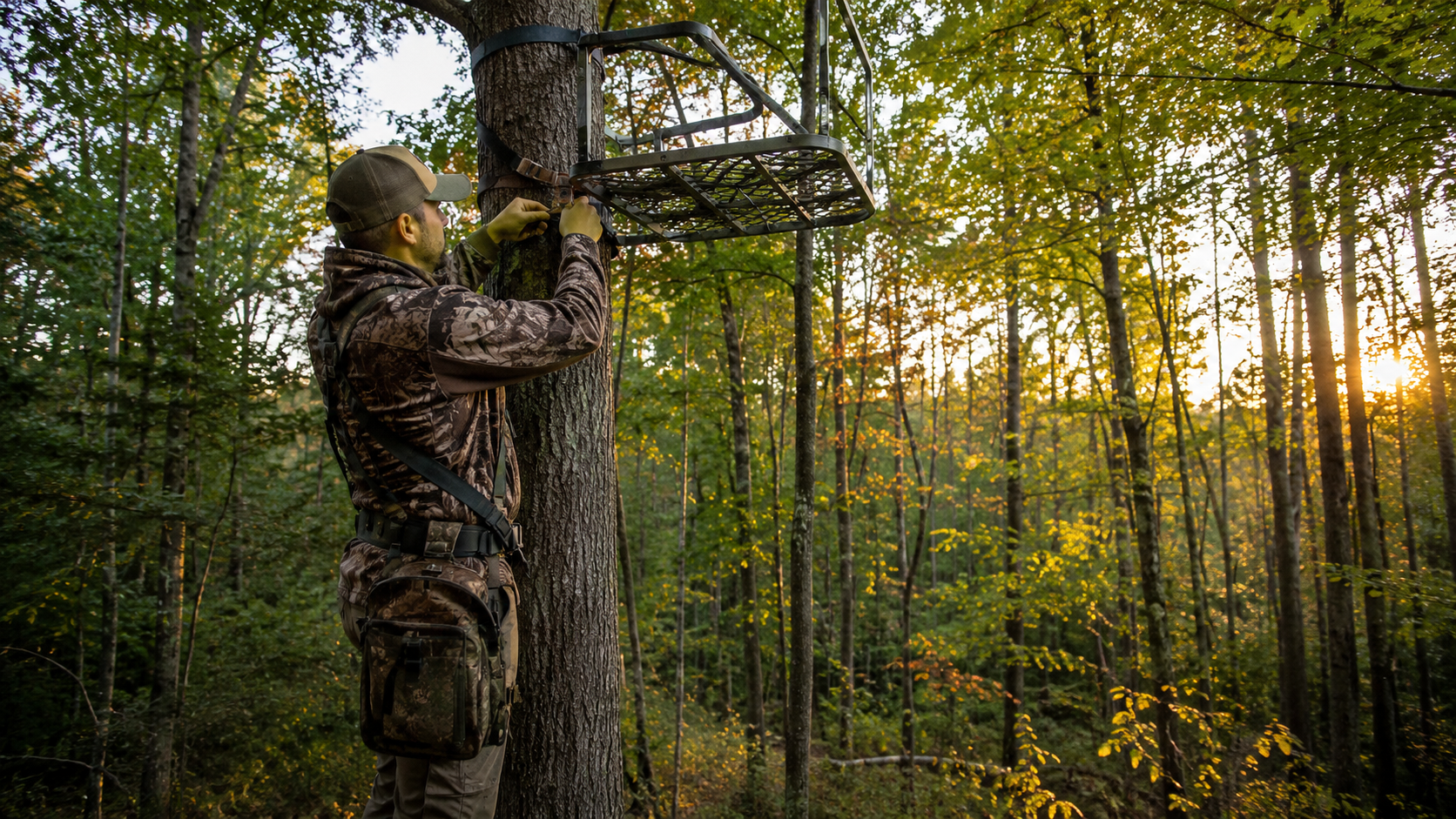
Check Every Stand Before You Hunt It
If the leased property includes existing stands, do not assume they are ready to use.
Weather, tree growth, animals, rust, damaged straps, and years of exposure can affect hunting equipment.
Inspect stands, ladders, platforms, steps, straps, attachment points, and surrounding trees before hunting.
If you install your own equipment, follow the manufacturer's instructions and use appropriate fall-protection equipment.
Opening morning is not the time to discover that something needs repair.
Trim Only What You Need
If the landowner permits trimming, keep it controlled.
You usually do not need to turn a stand location into an open field.
Clear enough for safe access, visibility, and reasonable shooting opportunities without unnecessarily changing the cover that made the location attractive in the first place.
Get the Work Done Before the Season
The closer opening day gets, the more we prefer to leave good hunting areas alone whenever possible.
Handle the noisy jobs beforehand.
Check stands. Clear access. Learn the boundaries. Figure out parking. Scout the important habitat features and decide which locations fit different winds.
Then give the property some room.
When opening day arrives, you want to walk onto leased ground with a plan—not start figuring the place out while you are already hunting it.
By Outdoorsmen. For Outdoorsmen.